Idle Outpost: Upgrade Games
- 4.5
- Rating
- 10.00M
- Installs
- Free
- Price

 Analysis by App-foxy
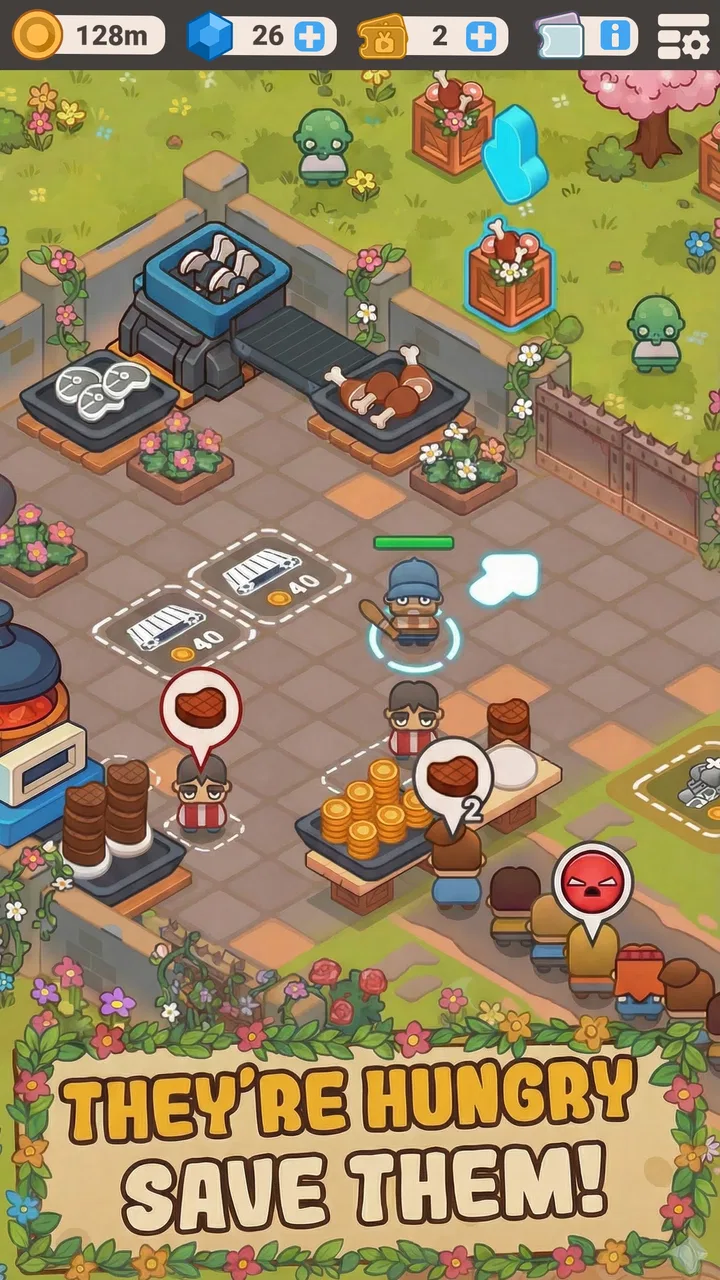
I went into Idle Outpost: Upgrade Games expecting a lightweight post-apocalyptic management game, and that is exactly where it finds its appeal. I am not directing a squad through a traditional action campaign or building a detailed city block by block. Instead, I am trying to keep a fragile outpost functioning, improve its production, and make the next return more productive than the last. The setting gives the routine a clear purpose: every upgrade feels connected to survival rather than being a random number increase.
This is a free simulation game from AppQuantum, available for players aged Everyone. It has attracted over ten million installs and holds a 4.7 average from around 148 thousand ratings, which places it among the more visible idle games on mobile. Those figures do not automatically make it a good fit for everyone, but they do match my impression that the game is easy to understand within minutes and structured around frequent, low-effort check-ins.
How the first action sets up the whole game
The first thing I do is inspect what the outpost can currently produce and decide where the next improvement should go. That decision is deliberately simple. I am not comparing a huge technology tree or learning a complicated combat system before I can play. I choose an available improvement, spend the resources I have collected, and wait for the outpost to become more efficient. The interface is designed to keep that action visible, so I rarely lose track of what the game wants me to do next.
You May Also Like

 Blood Strike: 2.5 Anniversary
Blood Strike’s Loadouts Turn Every Drop Into a Tactical Gamble
A close look at Blood Strike’s custom loadouts: how fast access to signature weapons reshapes its battle royale rhythm, rewards preparation, and narrows the gap between fights.

 Pandora - Music & Podcasts
Pandora’s Music Is Easy to Start, but Harder to Recover
Pandora’s strength is its low-effort path from a seed to a station. Its weak spot is how much confidence it asks you to place in connection, setup, and quiet recovery.

 8 Ball Pool
 Is Built on Rivalries, Rematches, and Routine
A close look at the rivalries, rematches, shared routines, and unanswered safety questions that turn a quick pool match into a persistent mobile community.

 Samsung Music
’s Quiet Strength Is Playing What You Already Own
Its reach comes less from spectacle than from dependable access to a personal library. That simplicity is both the app’s strongest retention engine and its ceiling.

 AccuWeather: Weather Radar
AccuWeather Review: A Quick, Clear Forecast for Everyday Decisions
For everyday plans, the best forecast is the one you can understand quickly. AccuWeather makes rain timing, radar, and local conditions easy to act on, with a few trade-offs.

 Hill Climb Racing
Why Hill Climb Racing Still Turns Crashes Into One More Run
A tiny car, a bumpy hill and one more upgrade: Hill Climb Racing keeps resurfacing because its simple chaos makes every near-miss feel personal.
More From Our News Desk



That accessibility is one of the strongest parts of the experience. Someone who normally avoids management games can understand the basic relationship between workers, resources, upgrades, and progress without reading a long manual. The post-apocalyptic theme also helps the loop feel less abstract. A stronger outpost suggests shelter, supplies, and a better chance of keeping people alive, even when the actual interaction is tapping through improvements.
The important distinction is that this is not a fast reflex game. I am not rewarded for moving quickly or reacting to enemies in real time. The challenge is choosing which improvement will make the next stretch smoother. That makes it comfortable to play with one hand while commuting, waiting for an appointment, or taking a short break. It also means that players looking for direct control, constant danger, or a story-heavy adventure may find the opening too passive.
Choosing upgrades instead of tapping without a plan
The most useful habit I developed was to stop treating every available upgrade as equally valuable. When resources are limited, the best choice is often the improvement that strengthens the next few minutes of progress rather than the one with the most impressive description. I look at what is currently slowing the outpost down, then spend toward that bottleneck. If production is lagging, I improve the source of that income; if an upgrade is affordable but does not change the immediate rhythm, I save instead.
This creates a small but satisfying layer of judgment. The game remains approachable, yet it gives me a reason to pay attention instead of blindly pressing every button. A player can certainly follow the obvious prompts, but better results come from noticing which part of the outpost is holding everything else back. That is a more interesting use of the idle format than simply collecting currency whenever a notification appears.
There is also a practical benefit to the straightforward layout: I can return after a break and understand my position quickly. I do not need to remember a complex sequence of actions. I check the available resources, see which improvements are ready, and make one or two decisions. For a game built around short sessions, that clarity matters more than elaborate menus.
The feedback rhythm: action, waiting, and visible progress
Once I make an upgrade, the game gives me a clear sense that the decision mattered. Production improves, the resource total begins moving in a more useful direction, and another upgrade comes into view. This is the central feedback rhythm: I act, the outpost responds, I collect the result, and the improved output gives me a reason to continue. It is a modest loop, but it is easy to follow and pleasant when the numbers begin working in my favor.
The idle element means progress can continue while I am away from the screen. That changes how I use the game. I do not need to stay for a long uninterrupted session to feel productive. I might make a few upgrades in the morning, close the game, and return later to find enough progress for another decision. The game is therefore better suited to repeated visits than to a single long play period.
A realistic example is a lunch break at work. I can open the game, collect what has accumulated, spend the resources on the most useful improvement, and leave once the next goal is clearly set. Later, I return with a stronger production rate and repeat the process. The session does not demand complete concentration, and I do not feel punished for stopping at a natural point. That makes it a good companion for fragmented free time.
However, the same rhythm can become predictable. The first few upgrade decisions feel meaningful because the outpost is changing quickly. After that, the experience depends heavily on whether I enjoy watching gradual improvement. If I want each session to introduce a new mechanic or a dramatic event, the repeated collect-and-upgrade pattern can feel thin. The game knows what it is, but it does not disguise the repetition.
Why the reward feels better when I plan around it
The reward is not only the resource total. It is the feeling that a previous decision has reduced future friction. When I improve the right part of the outpost, the next collection arrives sooner or supports a more substantial upgrade. That creates a useful sense of momentum: the game is not merely handing me currency, it is showing me the consequence of investing it.
I found that the most satisfying moments came from saving through a short waiting period rather than spending immediately. Holding resources can feel slow, but it lets me reach an improvement that changes the pace of the whole outpost. This is a small strategic trade-off that generic idle-game descriptions rarely explain. Immediate upgrades provide quick feedback, while delayed spending can produce a stronger chain of progress.
The reward structure also works well for players who like visible milestones but do not want the pressure of competitive play. There is no need for me to keep up with another player in the same moment. My progress is personal, and I can decide whether to play actively for a while or simply let the outpost develop between visits. That makes the game approachable for casual players and for people who enjoy optimization without leaderboards being the main attraction.
Still, free-to-play design deserves attention here. The game is free to download and play, but optional in-app purchases range from $0.99 to $250.00 per item. I would not recommend treating every purchase prompt as part of the normal progression plan. The healthiest approach is to view spending as optional convenience and decide on a personal limit before playing. If you dislike games that repeatedly present paid shortcuts, this aspect may be more irritating than the core simulation itself.
What happens when a session ends
The unusual strength of the idle format is that stopping is part of the design rather than a failure. I can end a session after setting the next upgrade target, and the outpost continues to give me a reason to return. The reset is not a dramatic restart of the whole game. It is the moment when I put the device down, let time pass, and come back to collect the result of my previous planning.
That structure makes the game easy to fit around daily routines. I can play before leaving home, during a short wait, or in the evening when I do not want a demanding game. The return session has a clear shape: collect progress, inspect the new options, invest carefully, and stop again when the next wait begins. The loop is especially effective when I want a game that acknowledges interruptions instead of requiring a long uninterrupted run.
There is a trade-off, though. Because the game is built around returning later, it can encourage habitual checking. I found it more enjoyable when I opened it at natural moments rather than treating every available notification as an obligation. Players who prefer games with a definite ending to each play session may appreciate the convenience, while players who are sensitive to endless progression should approach it with boundaries.
The version I reviewed is 1.26.8, and the game runs on Android 6.0 or later. That broad compatibility makes it accessible on many older devices, although the quality of an individual experience will still depend on the phone and its general performance. I would also make sure the game fits my available storage and battery habits before committing to frequent check-ins, especially if I plan to keep it installed alongside several other idle titles.
Who gets the most from the return loop
I think the strongest audience is someone who likes management games but has limited time. The outpost gives enough direction to avoid confusion, while the idle progression means a five-minute visit can still accomplish something. It is also a reasonable choice for players who enjoy upgrading systems, watching production improve, and making small efficiency decisions without learning a demanding control scheme.
It is less suitable for someone who wants a rich survival simulation with detailed crafting, exploration, or moment-to-moment danger. The post-apocalyptic setting supplies atmosphere and motivation, but the game’s main pleasure comes from progression management. A more active survival game would be a better choice for anyone who wants to gather materials personally, control a character directly, and respond to threats through action.
It may also be the wrong pick for players who want a fully offline-feeling experience with no commercial interruptions. The free entry point is useful, but the presence of purchasable items changes the tone. I can enjoy the game without paying, yet I still need to be comfortable ignoring optional spending opportunities. That is not a flaw unique to this title, but it is an important part of deciding whether its long-term rhythm will feel relaxing or pressuring.
How it compares with other mobile simulation games
Compared with a traditional city-builder, Idle Outpost: Upgrade Games is much lighter on layout and long-term planning. I am not spending most of my time arranging roads, balancing a large population, or solving a complicated chain of services. Its advantage is speed: I can understand the current problem quickly and make a useful decision before closing the app. The cost is that players who love detailed construction may find the outpost too streamlined.
Compared with a conventional survival game, it removes much of the physical struggle. I am not personally carrying supplies across a dangerous map or fighting to protect every resource. Instead, the survival fantasy is translated into production and improvement. That makes the game calmer and more accessible, but also less dramatic. The right comparison depends on whether “survival” means managing scarcity or actively enduring danger for you.
Against other idle games, its post-apocalyptic framing gives the upgrades a clearer emotional context. I am not simply increasing abstract income; I am trying to make a last refuge more capable. The setting does not eliminate repetition, but it gives the repetition a reason. I also appreciate that the basic loop can be understood without a large commitment, making it easier to test than a more complicated simulation with several interconnected systems from the start.
My practical advice is to judge the game after several return sessions rather than after the opening minutes. The initial tutorial-like flow can make almost any idle game seem engaging. The real question is whether you enjoy choosing improvements when the novelty fades. If you like that steady decision-making, the outpost has room to become a comfortable routine. If you need constant new content, the same routine may quickly feel mechanical.
My verdict on the complete action-to-return loop
The core loop works because each stage leads naturally to the next. I choose an upgrade, watch the outpost produce more effectively, receive a reward that opens another decision, and then leave with a clear reason to return. That chain is tangible rather than abstract: the action changes the pace, the feedback confirms the choice, the reward funds progress, and the pause lets the system keep moving without demanding my full attention.
My favorite tip is to treat every session as a planning checkpoint, not a race to spend everything. Collect first, identify the current bottleneck, compare the immediate improvement with the stronger upgrade that may require patience, and only then commit. This keeps the game from becoming a sequence of automatic taps and makes the limited decisions more satisfying.
I also recommend deciding in advance how much attention and money the game deserves. Its free price makes trying it easy, and its Everyone rating makes it broadly approachable, but the optional purchases can reach a high individual amount. I would play it as a casual management game, ignore pressure to accelerate, and stop when the loop begins to feel like a chore rather than a reward.
Overall, AppQuantum has made a focused simulation for people who enjoy gradual improvement more than direct action. It is polished around short visits, clear upgrades, and the pleasure of returning to a stronger outpost. The repetition and free-to-play prompts are real limitations, so I would skip it if I need a deep survival adventure or a completely hands-off commercial experience. For everyone else, the best reason to try it is the satisfying moment when a small decision turns the next session into an easier one.
FAQs for Idle Outpost: Upgrade Games
01What is Idle Outpost: Upgrade Games about?
Idle Outpost: Upgrade Games is a strategy-based idle game where players build and manage outposts in a post-apocalyptic world. The goal is to upgrade facilities, gather resources, and expand your territory while defending against various threats. It's designed for players who enjoy strategic planning and incremental progress.
02Is Idle Outpost free to play?
Yes, Idle Outpost: Upgrade Games is free to download and play. However, it does offer in-app purchases that can enhance gameplay. These purchases might include resource packs, special upgrades, or cosmetic items that can help improve your gaming experience, but they are not essential to progress.
03Does Idle Outpost require an internet connection?
Idle Outpost: Upgrade Games can be played offline, allowing you to continue building and upgrading your outpost without an internet connection. However, certain features like leaderboards and in-app purchases will require you to be online, so connectivity enhances the full experience.
04What are the main features of Idle Outpost?
Idle Outpost: Upgrade Games offers several engaging features, including resource management, base building, and strategic upgrades. Players must balance resource allocation while defending their outpost from threats. The game also includes an idle mechanic that allows progress even when the app is closed, offering a seamless and rewarding experience.
05Are there any age restrictions for Idle Outpost?
Idle Outpost: Upgrade Games is generally suitable for a wide audience, but it is recommended for players aged 12 and up due to mild violence and strategic complexity. Parents may wish to review in-app purchase options and game content to ensure it aligns with their preferences.
Pros
- Engaging idle gameplay mechanics.
- Smooth and intuitive user interface.
- Frequent updates with new content.
- Minimal battery consumption.
- No mandatory in-app purchases.
Cons
- Can become repetitive over time.
- Requires internet connection.
- Ads can be intrusive at times.
- Limited social interaction features.
- Slow progress without purchases.

Idle Outpost: Upgrade Games
Gallery